2026
08.27
Global Korea Forum2026
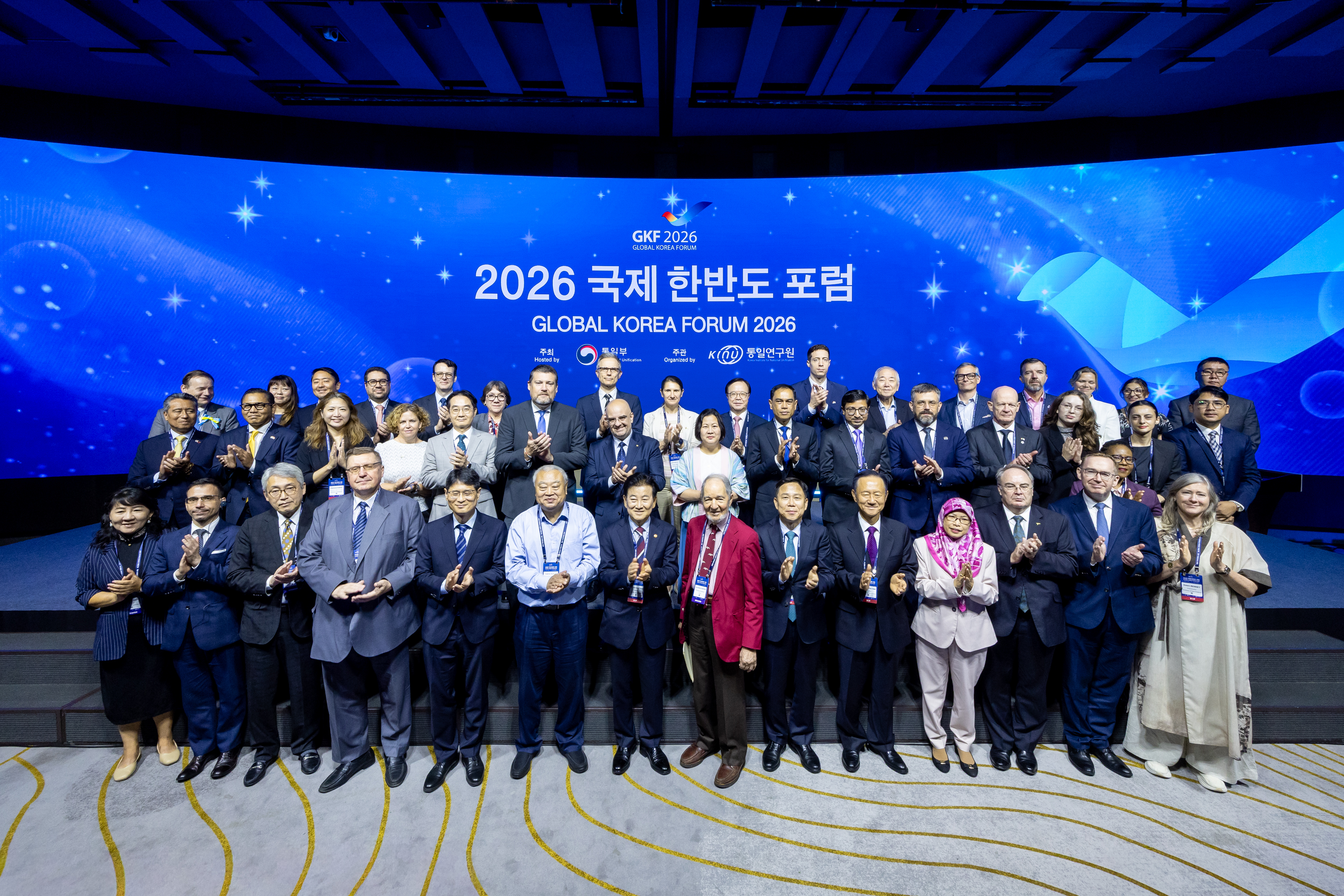
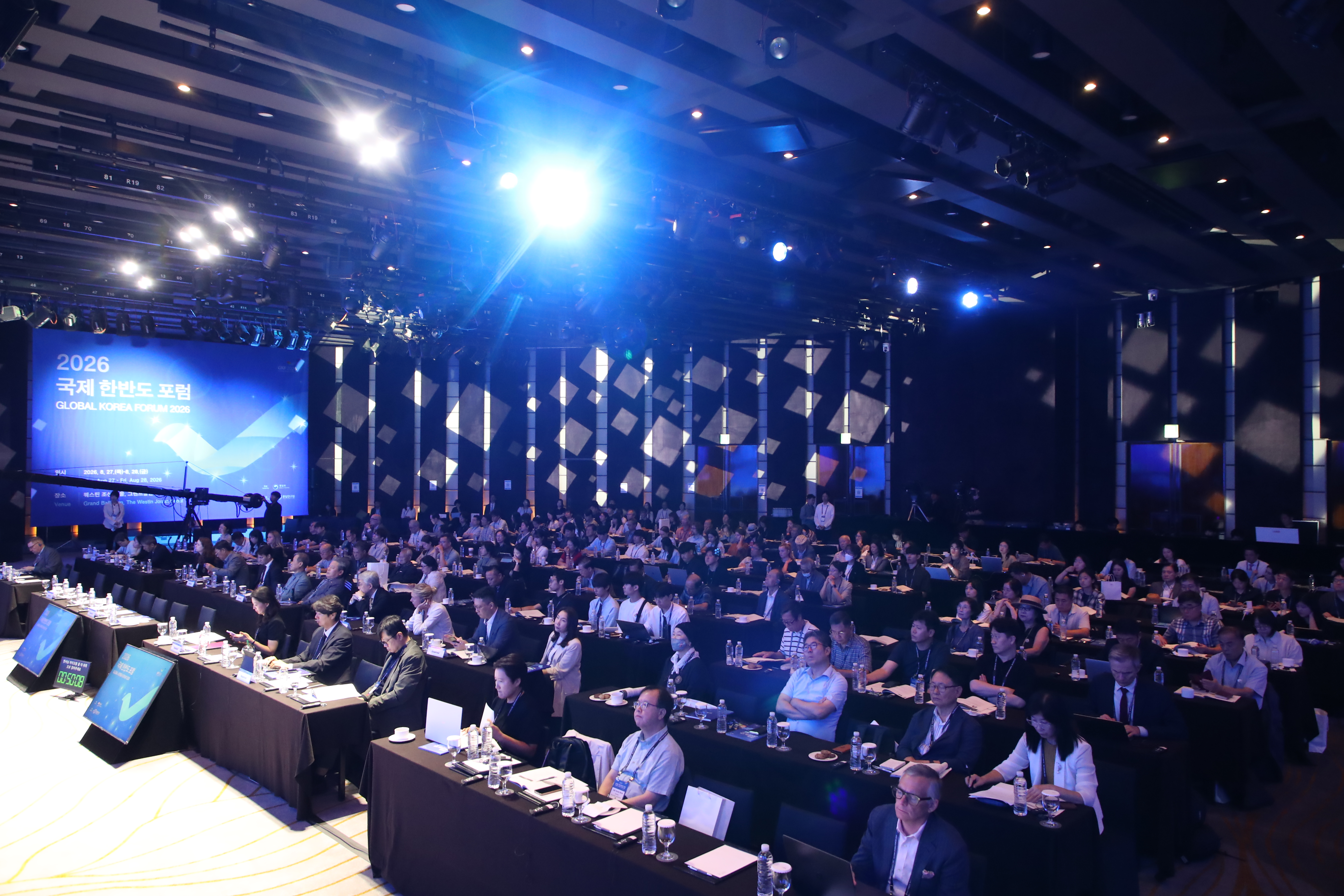
The Korea Institute for National Unification (KINU), headed by President Kwon Man-hak, organized the 2026 International Forum on the Korean Peninsula on August 27 (Thursday), from 9:30 a.m. to 6:10 p.m., and August 28 (Friday), from 9:20 a.m. to 5:30 p.m., under the overarching theme of “A New Paradigm for Peaceful Coexistence on the Korean Peninsula amid a Great Transformation of the International Order.”
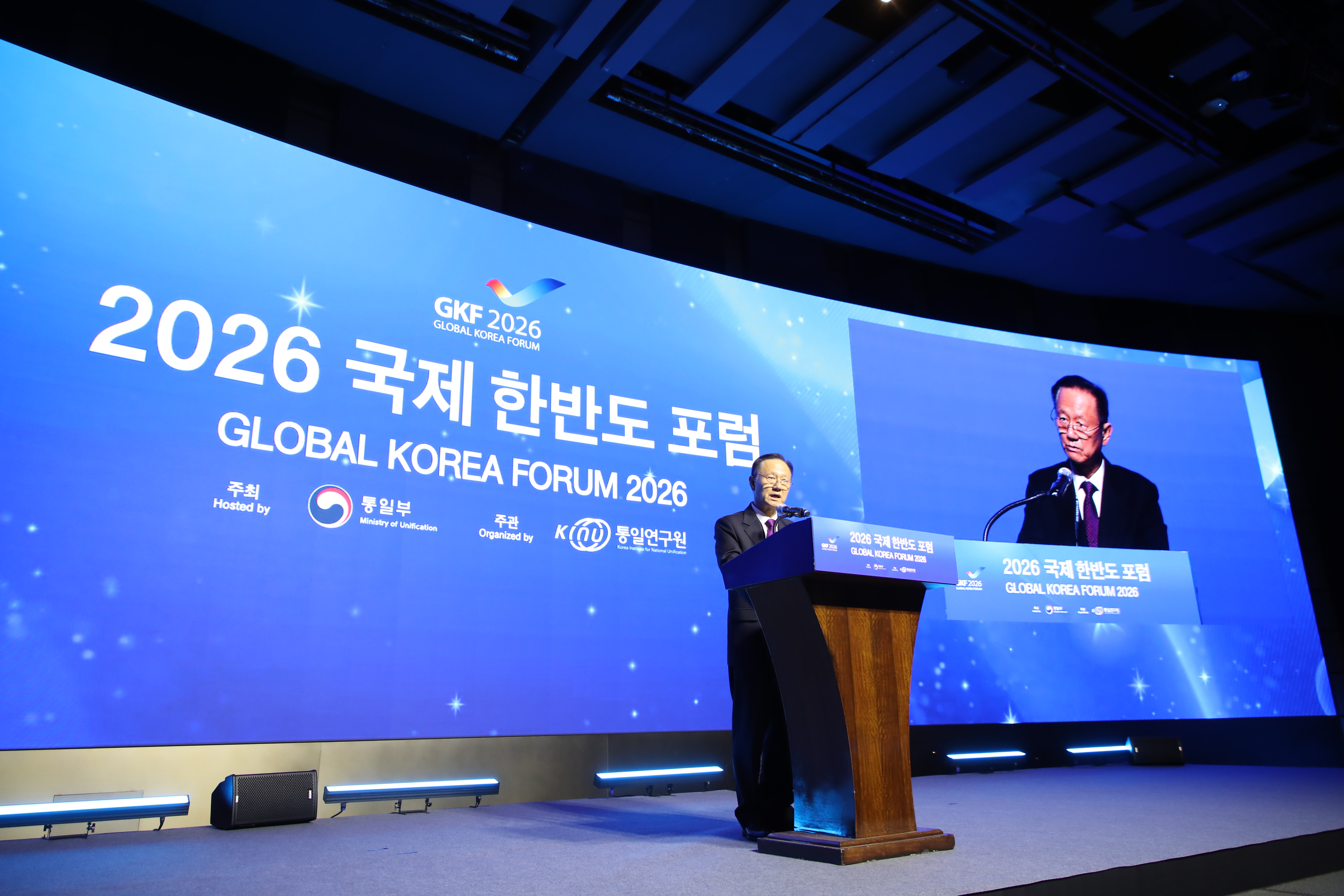
The International Forum on the Korean Peninsula is a flagship international academic conference hosted by the Ministry of Unification since 2010. Over the years, it has established itself as a forum for public discourse that brings together experts on the Korean Peninsula and inter-Korean relations from Korea and abroad, as well as government officials from major countries, thereby contributing to international discussions on peace and unification on the Korean Peninsula. The forum opened with an address by Minister of Unification Chung Dong-young, followed by welcoming remarks from KINU President Kwon Man-hak and written congratulatory messages from President Lee Jae-myung and National Assembly Speaker Cho Jung-sik.
The forum featured seven sessions: △Changes in North Korea, the United States, and the World, and Prospects and Challenges for Peaceful Coexistence on the Korean Peninsula; △A New Approach to Establishing a Peace Regime on the Korean Peninsula and Resolving the Nuclear Issue amid Changing Circumstances; △A Paradigm Shift in Inter-Korean Relations: Reconfiguring and Implementing a Model of Peaceful Coexistence; △Artificial Intelligence, Climate Change, and the Future of the Korean Peninsula: Technologies for Coexistence; △A New Paradigm for Economic Cooperation with North Korea: Developing a New Multilateral Win-Win Cooperation Model; △Recent Sociocultural Trends in North Korea and Exploring New Models of Exchange; and △Peaceful Coexistence on the Korean Peninsula: Perspectives of Foreign Residents and Naturalized Citizens in Korea.
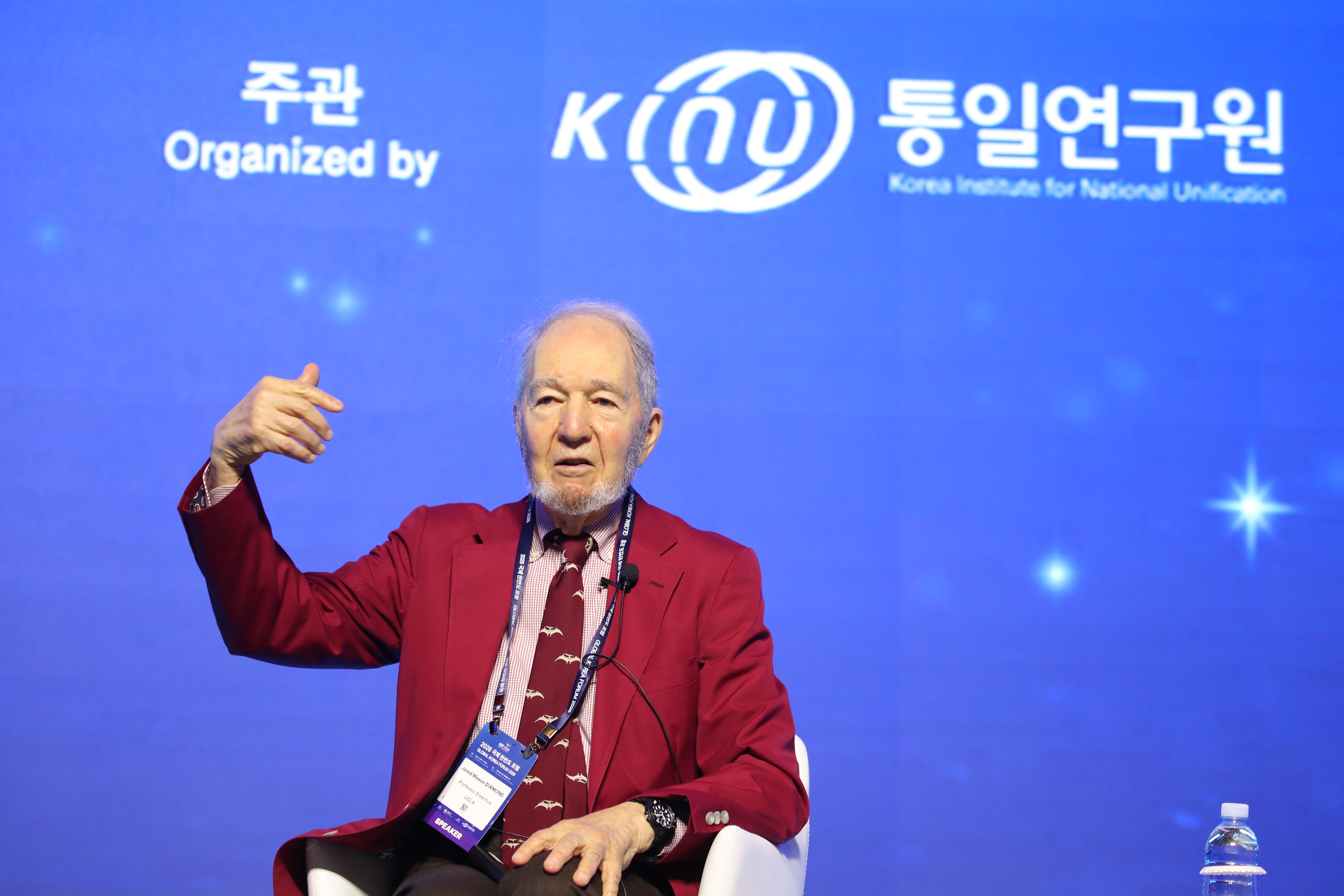
On the first day, August 27, Professor Jared Diamond, a world-renowned scholar best known as the author of Guns, Germs, and Steel, delivered the keynote address. Under the title “Choices of Nations: From Division to Peaceful Coexistence,” Professor Diamond shared insights and implications for peaceful coexistence on the Korean Peninsula based on historical cases from around the world.
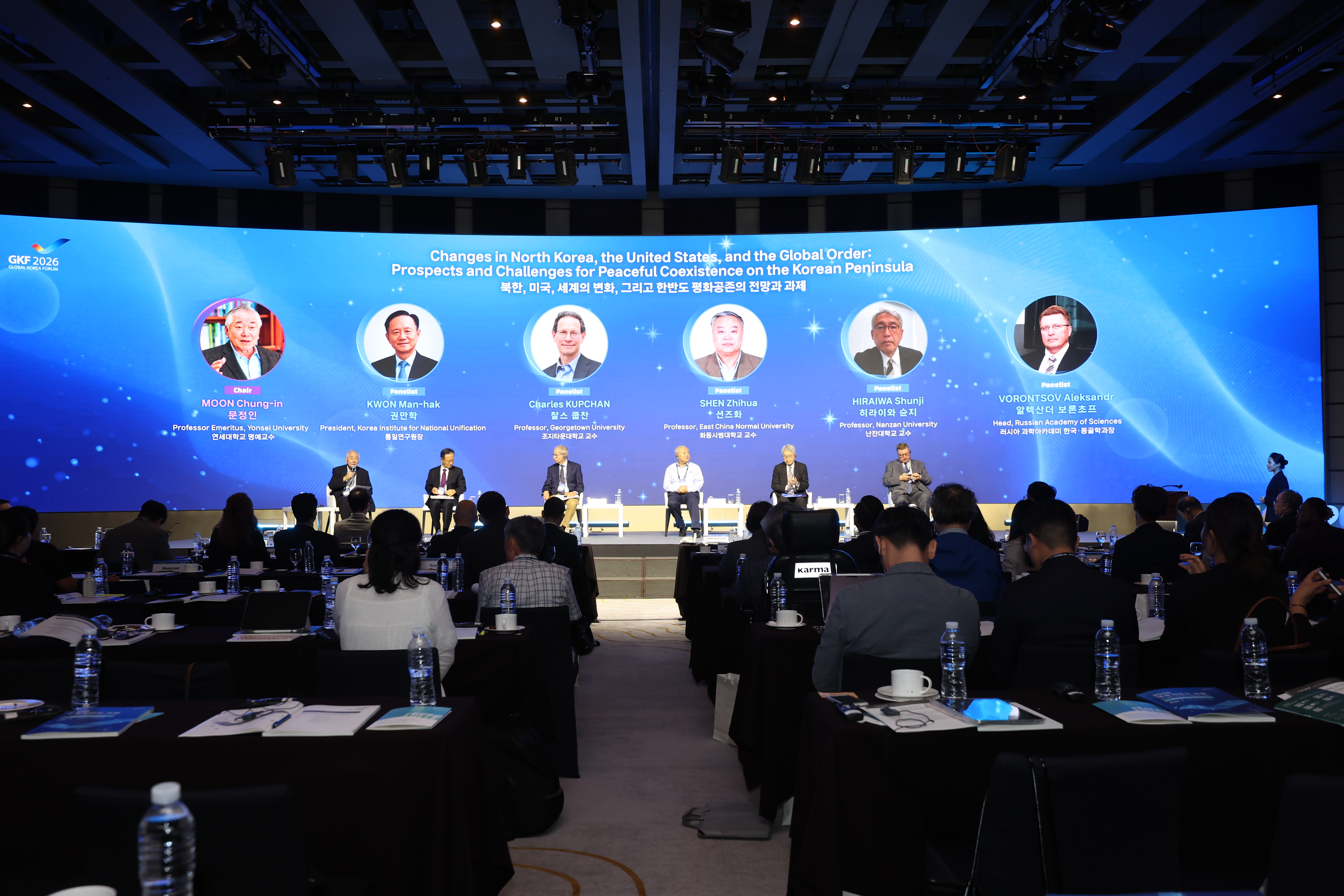
Session 1, titled “Changes in North Korea, the United States, and the World, and Prospects and Challenges for Peaceful Coexistence on the Korean Peninsula,” was moderated by Professor Emeritus Moon Chung-in of Yonsei University. The session brought together prominent experts from Korea, the United States, China, Japan, and Russia, including KINU President Kwon Man-hak; Charles Kupchan, Professor at Georgetown University; Shen Zhihua, Professor at East China Normal University; Shunji Hiraiwa, Professor at Nanzan University; and Alexander Vorontsov, Head of the Department of Korean and Mongolian Studies at the Institute of Oriental Studies of the Russian Academy of Sciences. The participants engaged in an in-depth discussion on changes in North Korea, the United States, and the world, as well as the prospects and challenges for peaceful coexistence on the Korean Peninsula.
Session 2, titled “A New Approach to Establishing a Peace Regime on the Korean Peninsula and Resolving the Nuclear Issue amid Changing Circumstances,” was moderated by Professor Kim Yeon-chul of Inje University, former Minister of Unification. Professor Koo Kab-woo of the University of North Korean Studies presented on “Overcoming the Trilemma on the Korean Peninsula: Prioritizing a Peace Regime and Adjusting the ROK-U.S. Alliance.” This was followed by a presentation by Choi Yong-hwan, Vice President of the Institute for National Security Strategy, on “Recommendations for Advancing a Peace Regime on the Korean Peninsula.” Jeffrey Lewis, Senior Researcher at Stanford University’s Center for International Security and Cooperation (CISAC), and William J. Perry Lecturer, presented on “Armed Coexistence: A Search for Practical Solutions.” Professor Lee Jung-chul of Seoul National University then presented on “A Peace-Oriented Solution to the North Korean Nuclear Issue: A Three-Stage Plan for a System of Peaceful Coexistence.” Discussants included Gong Kewei, Director of the Center for Korean Peninsula Studies at Shanghai University; Alexander Vorontsov, Head of the Department of Korean and Mongolian Studies at the Institute of Oriental Studies of the Russian Academy of Sciences; Professor Junya Nishino of Keio University; and Paik Seung Joon, Research Fellow at KINU.
Session 3, titled “A Paradigm Shift in Inter-Korean Relations: Reconfiguring and Implementing a Model of Peaceful Coexistence,” was moderated by KINU President Kwon Man-hak. Professor Choi Cheol-young of Daegu University presented on “Beginning Peaceful Two-State Relations: Respecting North Korea’s Statehood.” Lee Seok-beom, a member of the Korean Bar Association’s Committee on Unification Law, followed with a presentation titled “Institutionalizing Peaceful Coexistence: A Proposal for Advancing an ‘Inter-Korean Basic Agreement.’” Jeong Wook-sik, Director of the Hankyoreh Peace Institute, then presented on “A Confederation Model for Peaceful Two-State Relations.” Discussants included Jang So-young, Managing Attorney at Law Firm JR; Associate Professor Harrison Kim Chi-hyung of the University of Hawaiʻi at Mānoa; Professor Hannes Mosler of the University of Duisburg-Essen; and Associate Professor Do Kyung-ok of Chungnam National University Law School.
On the second day, August 28, Session 4, titled “Artificial Intelligence, Climate Change, and the Future of the Korean Peninsula: Technologies for Coexistence,” was moderated by Choi Hyun-kyu, Senior Researcher at the Korea Institute of Science and Technology Information. Panelists included Jeon Jae-sung, President of the East Asia Institute; Choi Jae-sik, Professor at the Kim Jaechul Graduate School of AI at KAIST; Myung Soo-jung, Senior Research Fellow at the Korea Environment Institute; Park Sung-won, President of the Korean Association of Future Studies; and Seo So-young, Research Fellow at the Korea Information Society Development Institute.
Session 5, titled “A New Paradigm for Economic Cooperation with North Korea: Developing a New Multilateral Win-Win Cooperation Model,” was moderated by Professor Yang Moon-soo of the University of North Korean Studies. Joung EunIee, Director of KINU’s North Korean Research Division, presented on “GTI and Northern Sea Route Development Strategies: A Proposal for Win-Win Cooperation among the Two Koreas, China, Mongolia, and Russia.” This was followed by a presentation by Ahn Byung-min, Visiting Research Fellow at Kyungnam University’s Institute for Far Eastern Studies, on “Prospects for Multilateral Cooperation in Developing North Korea’s Resource-Infrastructure Linkages.” Jenny Town, Senior Fellow at the Stimson Center and Director of 38 North, presented on “Prospects and Challenges for U.S. Participation in North Korean Development.” Kim Soo-jung, Head of the North Korea and Northeast Asia Team at the Korea Institute for Industrial Economics and Trade, then presented on “The Evolution of the Kaesong Industrial Complex Model: Prospects and Challenges for Establishing Industrial Complexes in North Korea Based on Multilateral Cooperation.” Discussants included Yoon In-joo, Research Fellow at the Korea Maritime Institute; Zhang Huizhi, Deputy Director of the Center for Northeast Asian Studies at Jilin University in China; Choi Jang-ho, Senior Research Fellow and Head of the International Cooperation Team for the Korean Peninsula at the Korea Institute for International Economic Policy; and Professor Olet Dean of Kyungnam University.
Session 6, titled “Recent Sociocultural Trends in North Korea and Exploring New Models of Exchange,” was moderated by Kim Jin-hwan, Visiting Researcher at Seoul National University’s Institute for Peace and Unification Studies. Panelists included Kim Ji-hyun, Head of the UNESCO Agenda Policy Center at the Korean National Commission for UNESCO; Sung Moon-jung, Senior Research Fellow at the Korea Institute of Sport Science; Bernhard Seliger, Representative of the Washington Office of the Hanns Seidel Foundation, who participated online; and Ha Seung-hee, Visiting Research Professor at Dongguk University’s Institute of North Korean Studies.
Session 7, titled “Peaceful Coexistence on the Korean Peninsula: Perspectives of Foreign Residents and Naturalized Citizens in Korea,” was moderated by announcer Moon So-ri. Panelists included Ilya Belyakov, Assistant Professor at the University of Suwon; Alpago Şinasi, foreign correspondent; and Peter Wint, broadcaster.
The forum served as a meaningful occasion to share with the international community the vision of a “Korean Peninsula of Peaceful Coexistence and Shared Growth” and to continue broadening domestic and international support for policies aimed at peaceful coexistence on the Korean Peninsula. The sessions are available on KINU’s YouTube channel.
행사사진